Rwanda
In search of the mountain gorilla through Rwanda and Uganda
About This Journey
There are roughly 1,100 mountain gorillas left on earth. All of them live in a single forested corridor straddling the borders of Rwanda, Uganda, and the Democratic Republic of Congo — in the Virunga volcanoes and the ancient rainforest of Bwindi Impenetrable National Park. This journey moves through both. It begins in Kigali, a capital city that has rebuilt itself in thirty years into one of the cleanest and most intentionally designed cities in Africa, and then moves outward through four of the continent's most extraordinary ecosystems: the savannah and lake system of Akagera, where lions and elephants and hippos operate against a landscape that looks like the rest of East Africa at its most distilled; the ancient mountain rainforest of Nyungwe, one of Africa's oldest forests and home to habituated chimpanzees and a 400-strong troop of Colobus monkeys moving through the canopy at 60 metres; the volcanic slopes of the Virungas, where Wilderness Bisate Lodge sits in a bowl of extinct volcano with the forest and the mountain gorillas beginning at the treeline; and finally Bwindi in Uganda, where the gorilla families move through the impenetrable forest on the southern ridge and Nkuringo Lodge looks out over the Virunga volcanoes from the highest point above the canopy. The hour you spend with the gorillas — at Volcanoes or at Bwindi — is the hour that reorganises everything that came before it.
What's Included
Day-by-Day Itinerary
The City on a Thousand Hills
Kigali
Arrive at Kigali International Airport and receive a VIP meet-and-greet with fast-track immigration assistance, visa processing, and luggage handling — the journey begins before you reach the city. Kigali is a capital that surprises consistently: clean, quiet by African city standards, intentionally designed, and carrying its history with a directness and lack of self-pity that is specific to Rwanda. Transfer to the Kigali Marriott on the hill above the city for check-in and an early evening briefing with your guide on the ten days ahead. The evening is yours — the rooftop pool, or a table at one of Kigali's increasingly serious restaurants, where the farm-to-table movement arrived earlier here than in most African capitals and has produced results.
Into the Savannah
Akagera
A morning departure east from Kigali through the rolling hills and tea plantations and villages that characterise the Rwandan interior — the country is famously small but famously hilly, and the road to Akagera moves through enough of both to arrive feeling like a journey. Akagera National Park occupies Rwanda's north-eastern corner along the Tanzania border: a 1,200-square-kilometre mosaic of savannah, woodland, wetland, and a chain of lakes fed by the Kagera River. The park was effectively dead by the mid-1990s; African Parks took over management in 2009 and has since reintroduced lion, black rhino, and elephant, making Akagera the only Big Five park in Rwanda. Arrive at Magashi Camp in the remote northern concession by midday for a briefing from your camp ranger before an afternoon boat safari on Lake Rwanyakazinga — the hippos at close range, the crocodiles on the bank, the elephants coming to the water's edge in the late afternoon light.
The Northern Plains
Akagera
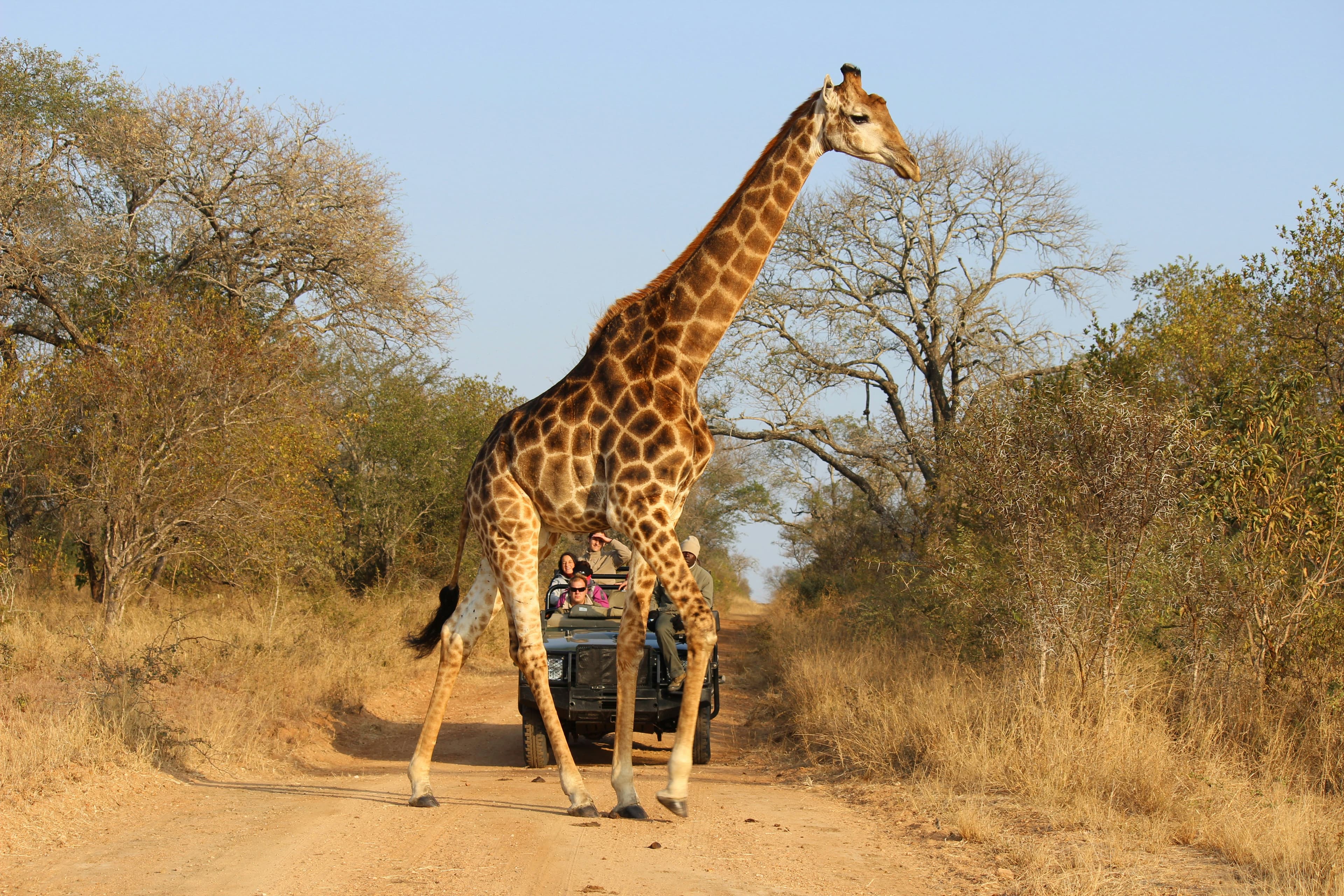
A full day in Akagera's northern concession with your Magashi ranger — the section of the park that the general visitor does not reach and that Magashi Camp was built to serve. A morning game drive across the savannah and through the woodland toward the northern plains: Masai giraffe moving through the acacia at the pace that only giraffes manage, buffalo herds on the grassland, the leopard that your ranger has been tracking for three mornings, and the black rhino — reintroduced here in 2017 and one of the few populations in Rwanda — which requires patience and rewarded attention. A picnic lunch in the field, then an afternoon drive back through the wetlands as the light drops and the birds — Akagera has over 500 species — begin the evening shift. Return to camp for dinner under the Rwandan sky with the lake visible below.
Return to Kigali
Kigali
An early morning game drive from Magashi Camp — the animals are most active in the first hour of light and the savannah at dawn operates at a different register from any other hour. Return to camp for breakfast before the road transfer west back to Kigali. The afternoon belongs to the city: the Kigali Genocide Memorial, which is the most important single site in contemporary Rwanda and which your guide will accompany you through if you wish — it is not required but it is revelatory; the Inema Arts Centre in Kacyiru, where young Rwandan artists work in the visual tradition that the country has been developing with extraordinary energy since 2010; or the fashion and jewellery quarter of the city, where Rwandan textile and craft design has produced work that the wider continent is now paying attention to. Dinner at a Kigali restaurant of your choosing — your concierge will book.
The Ancient Forest
Nyungwe
An early departure south from Kigali toward Nyungwe — a four-hour road journey that passes through the Cultural Heritage Corridor of Rwanda, with a stop at the King's Palace Museum at Nyanza, where the royal court of the Mwami kings has been reconstructed in the traditional style of tall grass architecture, and the Ethnographic Museum at Huye, one of the finest in Central Africa. Arrive at Nyungwe and check into One&Only Nyungwe House on the tea plantation at the forest's edge. The forest announces itself in the afternoon: 1,000 square kilometres of mountain rainforest that stayed green through the Ice Age because it is old enough to have preceded it — older than the Bwindi forest, older than almost any forested ecosystem in Africa, and demonstrably more biodiverse because of it. A late afternoon orientation walk into the forest edge before dinner at the lodge.
Chimpanzees and the Canopy
Nyungwe
A pre-dawn wake-up and a transfer to the park briefing point before first light. Nyungwe's habituated chimpanzee families have been tracked here since the 1980s, and the briefing ranger will explain the day's most recent sighting data before the trek begins. The walk into the forest is itself extraordinary: 13 primate species live here, including a 400-strong troop of Ruwenzori black-and-white Colobus visible in the canopy from the trail, and 300 bird species including 16 Nyungwe endemics that exist nowhere else. The chimpanzees — when found, and they are found — are followed for one hour at close range: the tool use, the social hierarchy, the way they move through the upper canopy with a casual authority that the forest floor never quite matches. Return to the lodge for a late lunch. The afternoon moves to the canopy itself: a 60-metre suspended walkway through the forest ceiling and a zipline over the treetops — the forest from above, which is a completely different ecosystem from the one at ground level.
The Volcano Slopes
Volcanoes NP
A morning departure north from Nyungwe toward the Virunga volcanoes — the volcanic chain that marks the border between Rwanda, Uganda, and the DRC, and that contains the highest concentration of mountain gorillas on earth. The road northward passes through the tea-covered hills of western Rwanda and arrives at the base of the Virungas by early afternoon. Check into Wilderness Bisate Lodge — six forest villas on the inner slope of an extinct volcano in a private reforested concession that merges directly with the park boundary — and spend the afternoon in the lodge, which is itself an experience: the architecture, the reforestation story of the volcanic bowl the camp sits in, the views into the forest canopy from the villa deck. A late afternoon visit to the Ellen DeGeneres Campus of the Dian Fossey Gorilla Fund — an educational centre dedicated to gorilla conservation with direct access to the research and field teams working in the Virungas. The evening briefing at Bisate covers tomorrow: the gorilla family, the route, the protocol.
The Silverback
Bwindi
The morning that the entire journey has been building toward. A pre-dawn breakfast at Bisate, then a transfer to the park headquarters for the gorilla trekking briefing — which gorilla family you have been assigned, their last known position, the altitude, the terrain. Then into the Volcanoes National Park: bamboo forest transitioning to Hagenia woodland as the altitude increases, the guide tracking the family by the trail of broken vegetation and fresh dung and the specific sound — half bark, half hum — that the silverback makes when he is nearby. The encounter itself: one hour with the gorilla family at whatever distance the silverback permits, which is usually closer than you expect and closer than feels entirely comfortable, and which produces a quality of attention that no other wildlife experience in the world quite replicates. Return to Bisate for a late breakfast and then a road transfer north and across the border into Uganda toward Bwindi Impenetrable National Park and Nkuringo Gorilla Lodge on the southern ridge.
Bwindi — The Second Forest
Bwindi
The morning reveals what Nkuringo's position means: 360° views from the southern ridge across the impenetrable forest canopy to the Virunga volcanoes on the horizon in Rwanda, the mist still in the valleys below, the forest completely silent except for the birdsong. A second gorilla trek — this time into Bwindi's southern sector with the Nkuringo gorilla family, a habituated group that has been monitored since 1997 and that moves through a different terrain from the Virunga encounter: steeper, denser, wetter forest, with the gorillas often lower in the vegetation and the trek shorter. The two encounters — Volcanoes and Bwindi — are the same species in completely different ecosystems, and the contrast between them is part of what makes this itinerary's structure worth preserving. Return to Nkuringo for a late lunch and an afternoon entirely at leisure on the ridge: the view, the lodge's organic garden, the forest sounds, and the particular feeling of having spent two consecutive days with the rarest great ape on earth.
The Road Back
Kigali
A final breakfast on the Nkuringo ridge before the road transfer north through Uganda and back across the border into Rwanda — the reverse of yesterday's crossing, through the same border post at Cyanika and back through the Virunga landscape toward Kigali. Optional stops in Musanze — the gateway town to the Virungas — for a coffee or a visit to a local craft cooperative before the final two-hour drive to Kigali. Arrive at Kigali International Airport in time for the evening international departure with VIP meet-and-greet assistance. Kigali handles direct connections to London, Brussels, Dubai, Doha, Nairobi, and Addis Ababa, with onward routing to India, the US, and Southeast Asia via Gulf and East African hub connections.
Why Book With Us
The Bohemian Boys difference.
Tailored Journey
Every itinerary is shaped around how you travel, not pre-packaged.
Insider Access
Doors that don't open for general travellers open for ours.
Global Expertise
Designed by people who have lived and travelled the destinations.
Membership Access
A circle of like-minded travellers, beyond the trip itself.
More to Explore